





Two kinds of eye wrinkle, two kinds of ingredient
Crow's feet are expression lines. They are carved by the muscle that closes the eye, thousands of times a day, and they appear first in your 30s. The ingredient with evidence for them is a neuromodulating peptide, one that quietens the signal between nerve and muscle so the fold is made less deeply. Retinol does little for a line that is being actively re-creased.
Under-eye lines are different. They are the fine crosshatching that appears as the skin thins and dries, and the deeper fold that forms as the fat pad shifts. These respond to anything that thickens the skin and holds water in it: retinoids over months, multi-weight hyaluronic acid over hours, ceramides to stop the water leaving. Most eye creams pick one of these jobs. The best do both.
Peptides or retinol around the eye
Retinol is the better-studied molecule and the one most likely to make you stop. The eye area is where retinol irritation shows first, as redness and flaking along the orbital bone, and a surprising number of people give up on an eye cream they paid £30 for by week three. Peptides do not have that problem. They are slower to show on under-eye texture and faster to show on expression lines, and they can be used morning and night, under concealer, from the first day. If you have never used a retinoid around the eye, start with peptides. If your under-eye skin is crepey and you tolerate retinol on the face, add a retinol eye cream at night.
How we ranked them
- Named actives with evidence for lines, at a stated concentration where possible.
- Which kind of line it treats, and whether it is honest about that.
- Tolerance around the eye, judged on skin that reacts.
- How it sits under concealer, because an eye cream that pills is an eye cream you skip.
- Price per month at a grain-of-rice dose per eye.
We did not score cooling sensations from menthol, and we did not score jar design.
The six, ranked
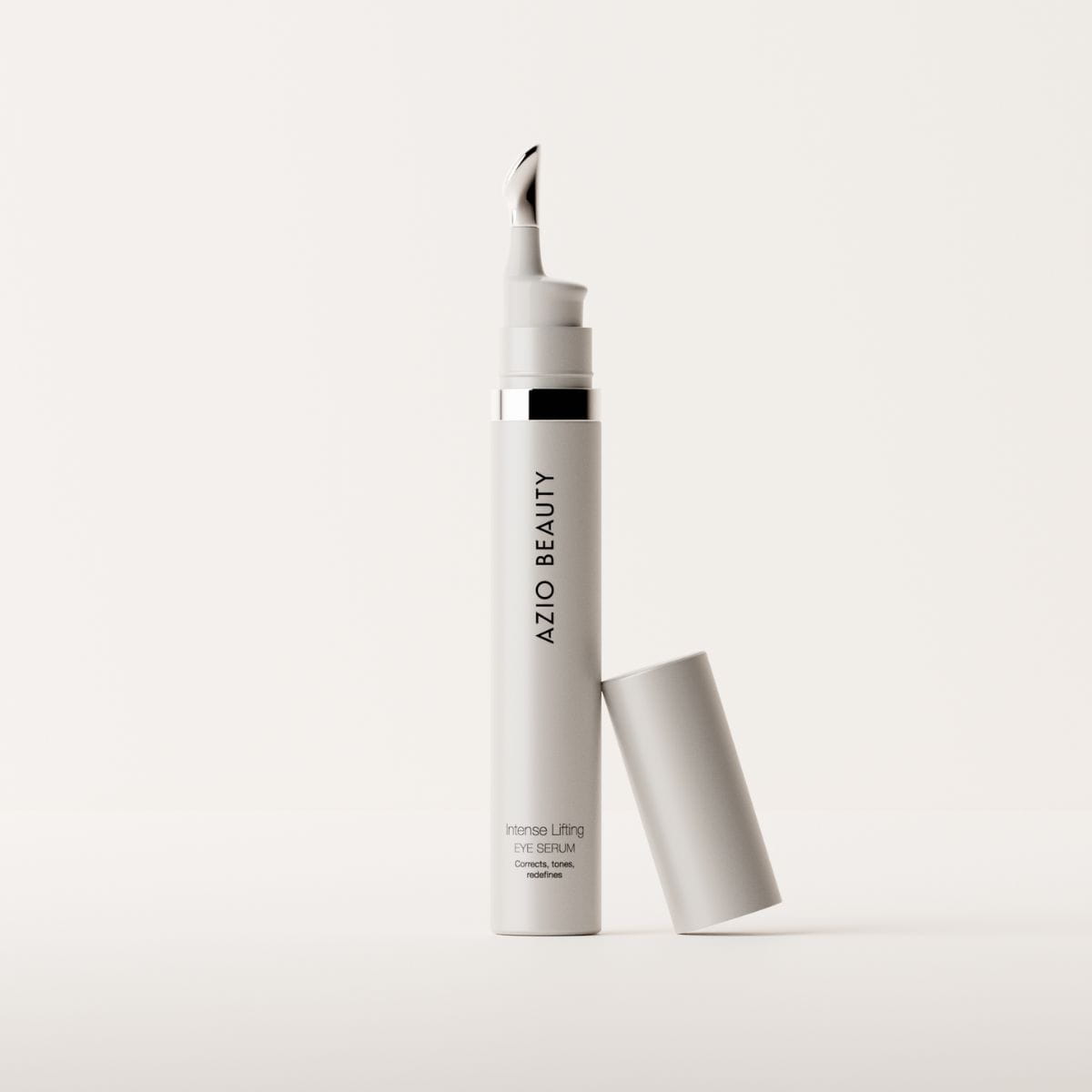
Azio Beauty Intense Lifting Eye Serum
What it is: a concentrated eye serum built on Alpha Complex at 10%, a blend of three peptides (Pentapeptide-18, Hexapeptide-10, and Acetyl Tetrapeptide-5), with a seven-weight hyaluronic acid complex, Ceramide NP, Beta-Glucan, and Vitamin E, dispensed through a cooling Zamak applicator. Fragrance free, 15ml, £29.
Why it won: it is the only formula here that addresses both kinds of eye wrinkle with named peptides at a stated level. Pentapeptide-18 is a neuromodulating peptide that softens the muscle signal behind crow's feet, Hexapeptide-10 supports the skin's own structural proteins so the under-eye thickens over weeks, and Acetyl Tetrapeptide-5 is the peptide with the strongest evidence for puffiness, which matters because a puffy under-eye folds and lines more. Together they are 10% of the formula, not a trace for the label. The HA7 complex hydrates across seven molecular weights, so fine crosshatching looks softer within the hour and the effect holds, and Ceramide NP with Beta-Glucan keeps that water in the skin overnight. The Zamak tip is cold on contact and lets you apply pressure without dragging, which is how most eye-area damage is done. It can be used morning and night from day one on reactive skin, and it sits under concealer without pilling.
What we'd change: there is no retinoid in it, and we would rather say that than imply otherwise. For deep, static under-eye folds in your 60s, a retinol eye cream at night alongside this will do more than this alone. The 15ml size looks small next to the jars below; at the correct dose it lasts about three months.
Who it's for: anyone whose first eye wrinkles are crow's feet, anyone who has reacted to retinol around the eye, and anyone who wants one product for lines, puffiness, and hydration that works under makeup.
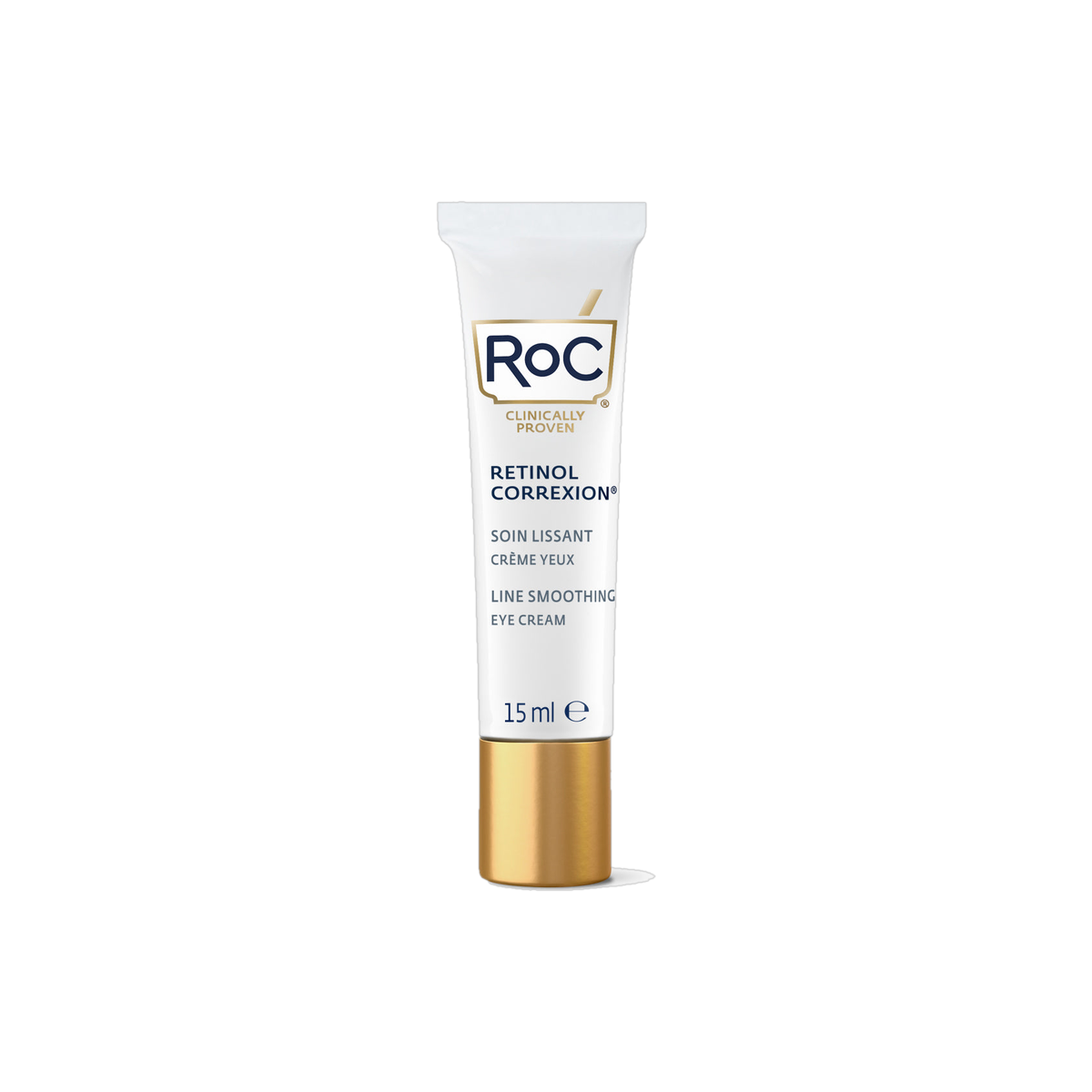
RoC Retinol Correxion Line Smoothing Eye Cream
What it is: a fragrance-free eye cream built on RoC's pure retinol and a mineral complex of magnesium, zinc, and copper, in a 15ml tube at around £30. RoC has been making retinol eye cream for longer than almost anyone and this is its best-known formula.
Why it ranks: it is the retinol eye cream with the most consumer-test history behind it, the texture is light enough to use daily once your skin has adjusted, and it is fragrance free, which many retinol eye creams are not. On the fine crosshatching under the eye it does what retinol does: skin is thicker and smoother after 12 weeks of consistent use. The tube keeps the retinol stable, which the jars in this category do not.
What we'd change: RoC does not publish the percentage, so you cannot place it on the ladder precisely; our estimate is low-to-moderate. Expect adjustment in weeks two to four, and start every other day, as RoC itself advises. Its puffiness and dark-circle claims rest on the mineral complex rather than caffeine or a named peptide, and if you use it in the morning, SPF over it is not optional.
Who it's for: anyone who tolerates retinol on the face and wants the same mechanism for crepey under-eye skin, from a brand that has done the testing.
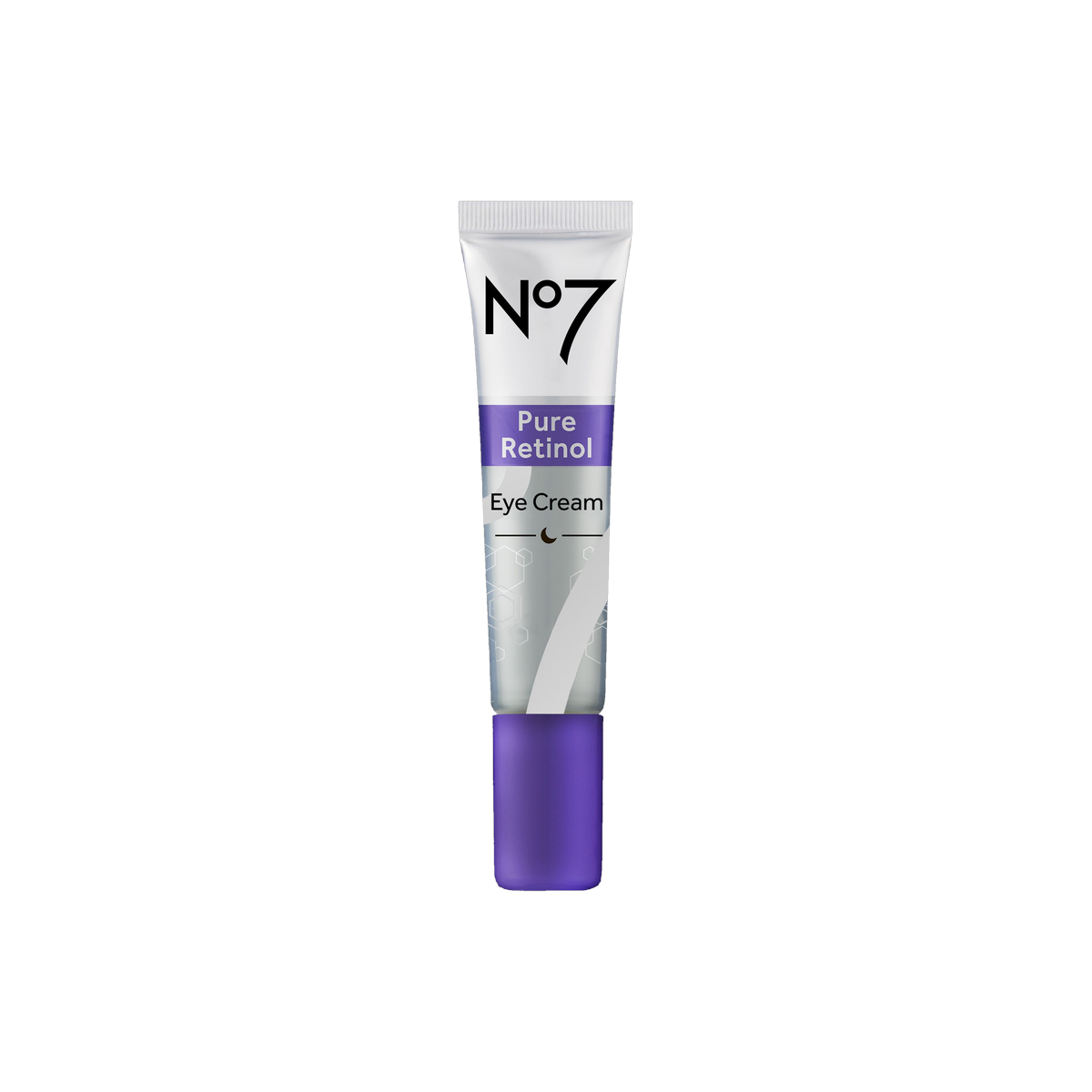
No7 Pure Retinol Eye Cream
What it is: a fragrance-free eye cream from Boots' in-house brand, combining 0.5% pure retinol with No7's Matrixyl 3000+ peptides (Palmitoyl Tripeptide-1 and Palmitoyl Tetrapeptide-7), with shea butter and bisabolol to buffer it. 15ml, around £25 and often on offer.
Why it ranks: it is the strongest retinol eye cream here and one of the few whose brand states the level, 0.5%, and it pairs the retinol with a collagen-signalling peptide, which is the right combination for under-eye lines. The shea and bisabolol base is well judged, so the retinol is cushioned rather than bare, and No7's consumer studies on UK women give it a track record in the market it is sold in. At its usual price it is also the best value per millilitre of the retinol creams.
What we'd change: the retinol level is at the higher end for an eye product, so first-time retinol users should start at two nights a week and watch the orbital bone. It is a night cream only, the shea makes it richer than some will want under the eye, and it contains drying alcohol, which reactive skin may notice. The 0.5% is in No7's product information rather than printed on the tube.
Who it's for: someone who has used retinol on the face for six months or more and wants a proven version with a stated dose for the eye area.
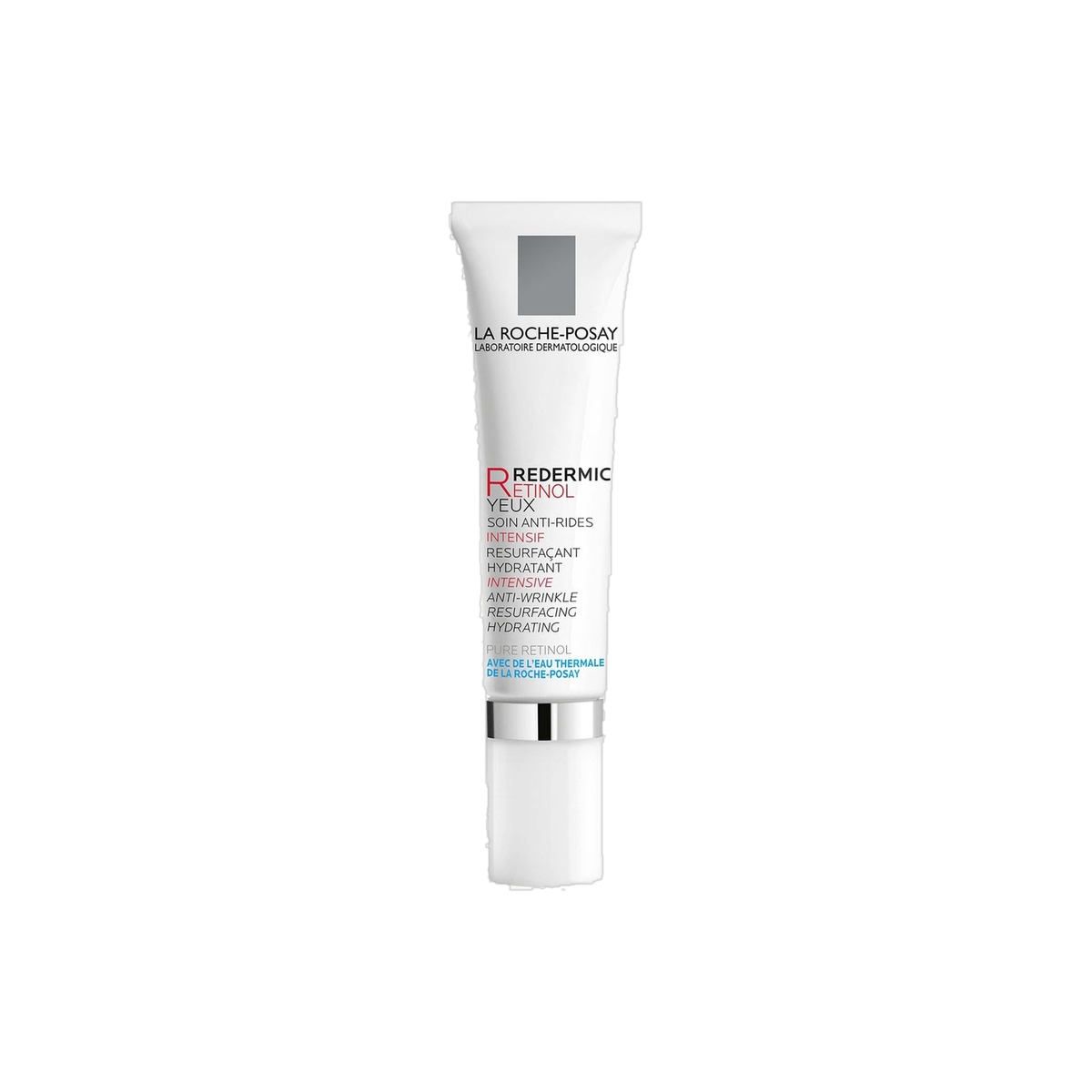
La Roche-Posay Redermic R Eyes
What it is: a pharmacy eye cream combining 0.1% pure retinol with 0.1% of a retinol booster complex (Retinyl Linoleate and Adenosine), 0.2% caffeine, and hyaluronic acid, in a 15ml tube at around £32. Fragrance free.
Why it ranks: it states every active at a percentage, which no other retinol eye cream here does in full. The low retinol dose with a booster is clever for the eye area, where a single strong dose tends to sting, and the caffeine makes it the only retinol eye cream here with a named depuffing active. It is well tolerated by La Roche-Posay's standards, which are high, and it layers under makeup once absorbed.
What we'd change: at 0.1% the retinol is modest, so the under-eye results are slower than entries two and three, and the caffeine effect is temporary. It tries to do two jobs and does each moderately. The texture can pill under heavier concealers.
Who it's for: the reader with early lines and puffiness who wants a gentle introduction to retinol around the eye in one step.
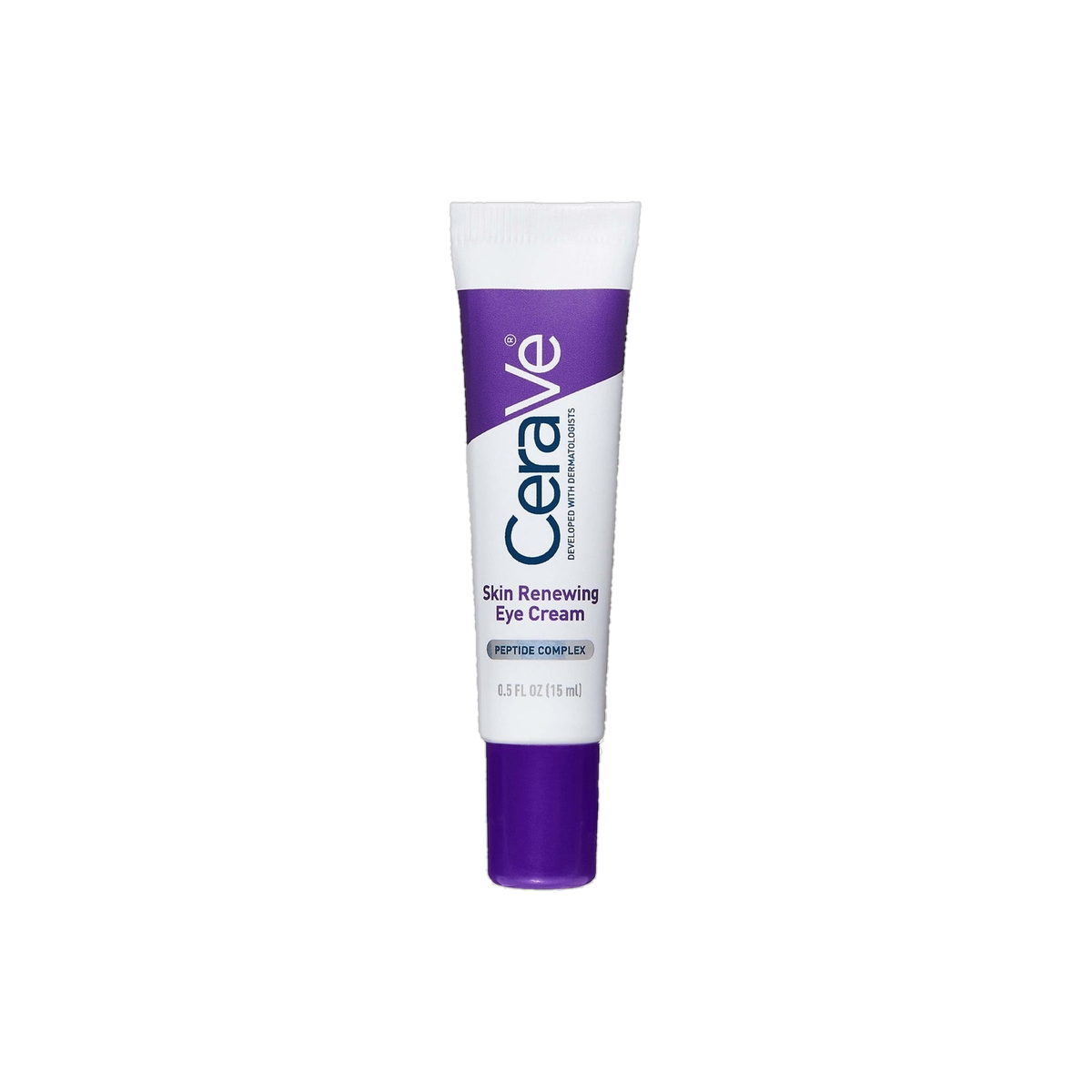
CeraVe Skin Renewing Eye Cream
What it is: a pharmacy eye cream with a peptide complex (Palmitoyl Tripeptide-1 and Palmitoyl Tetrapeptide-7), caffeine, niacinamide, three ceramides, and hyaluronic acid. Fragrance free, 15ml, £24 and regularly under £20.
Why it ranks: it is the best budget eye cream for fine lines because it takes the barrier seriously. Ceramides and niacinamide thicken and strengthen thin under-eye skin over months, the peptide complex adds a mild collagen signal, and the formula is tolerated by skin that reacts to almost everything. For the crosshatching that comes from dryness rather than depth, it is a sensible first product.
What we'd change: the peptides sit low on the ingredient list and CeraVe does not state their level, so the firming is modest, and there is nothing in it for expression lines. The texture is a standard cream that sits heavier under concealer than the serums here. Think of it as the eye cream that repairs the surface so the actives in a stronger product can work.
Who it's for: sensitive or very dry under-eye skin, anyone on a budget, and anyone who needs barrier repair before they need anything else.
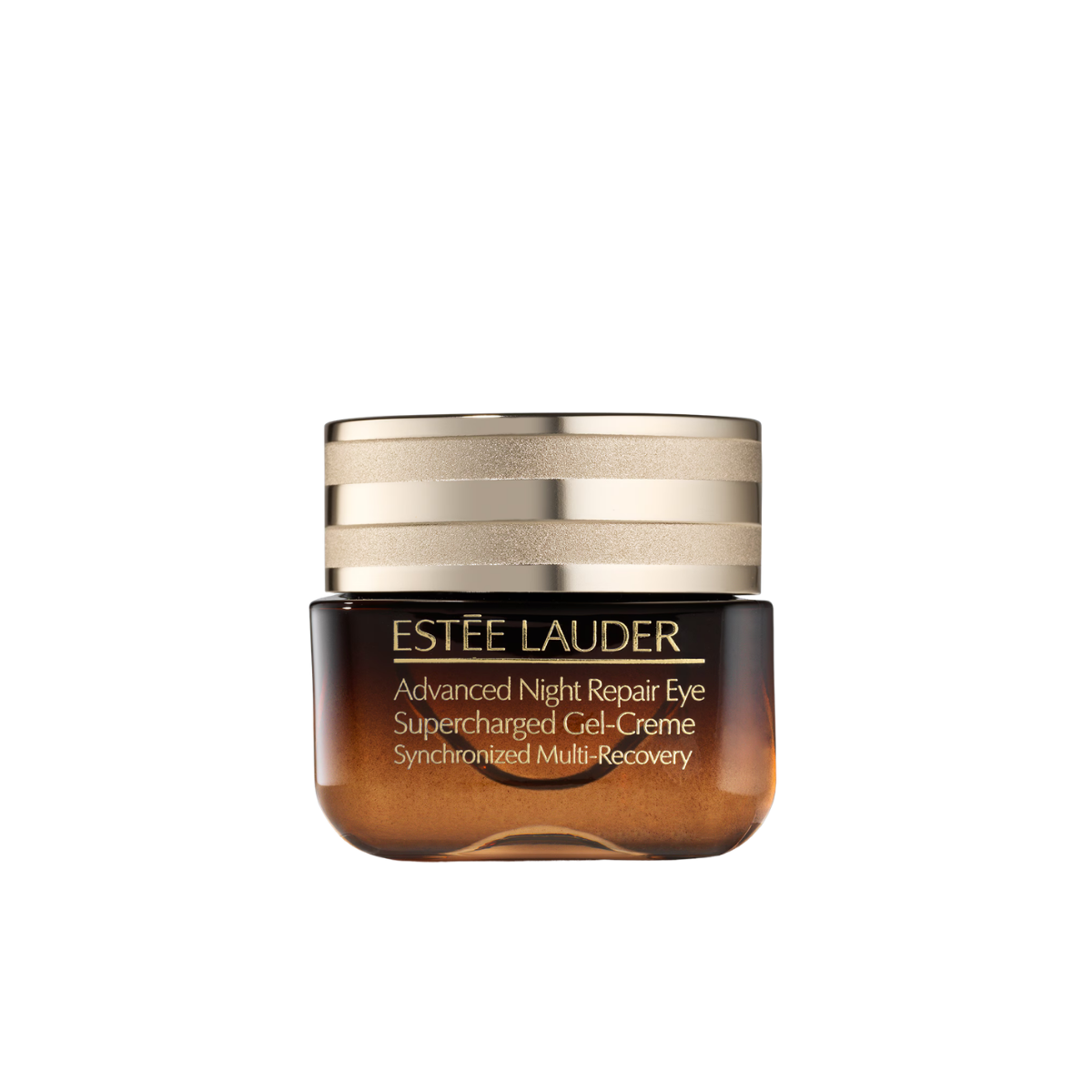
Estée Lauder Advanced Night Repair Eye Supercharged Gel-Cream
What it is: a prestige water-gel cream with Estée Lauder's patented Tripeptide-32, hyaluronic acid, caffeine, vitamin E, and the Bifida ferment from the Advanced Night Repair serum, in a 15ml glass jar at £56. Free of synthetic fragrance, though it contains lavender extract and chamomile oil.
Why it ranks: it is the best all-rounder at the prestige end, with hydration that holds through the night, a peptide and antioxidant blend with Estée Lauder's extensive testing behind it, and a texture that sinks in fast and sits beautifully under concealer. For lines, dryness, and tired-looking eyes together, it hedges well.
What we'd change: hedging well means doing several things moderately. There is no retinoid and no neuromodulating peptide, so it will not beat entry one on crow's feet or entries two and three on deep under-eye lines. The jar is the wrong packaging for antioxidants, the botanical oils can bother very reactive eyes, and the price is the highest here per millilitre.
Who it's for: the reader who wants a luxurious, comfortable eye cream that improves everything a little and does not want to think about ladders or mechanisms.
Side by side
Azio Intense Lifting Eye Serum
RoC Retinol Correxion
No7 Pure Retinol Eye Cream
La Roche-Posay Redermic R Eyes
CeraVe Skin Renewing Eye Cream
Estée Lauder ANR Eye Supercharged
£ high street · ££ mid · £££ luxury
A pick for each decade
The lines change, so the answer changes.
In your 40s the problem is usually crow's feet first and dryness second. Start with the Azio Eye Serum morning and night. You do not need a retinoid around the eye yet, and starting one early is how people learn to hate retinol.
In your 50s the under-eye begins to crosshatch and the skin thins. Keep the peptide serum in the morning and add a retinol eye cream at night, the RoC if you want gentle, the No7 if you tolerate retinol well. Give it 12 weeks.
In your 60s the deeper fold under the eye and the loss of firmness are the main concern. The No7 at night for its retinol-plus-peptide combination, the Azio in the morning for the three peptides and the hydration, and the honest acknowledgement that a cream improves texture and firmness but does not restore volume.
How to apply it so it works
- A grain of rice per eye. Eye cream migrates; more than that ends up in the eye and makes puffiness worse by morning.
- Apply along the orbital bone, from inner corner outward, not on the lash line.
- Press, don't rub. The eye area lines from friction as much as from age.
- Morning: a cold applicator or a cold tool for 60 seconds first if puffiness is part of the picture, then the serum, then SPF to the orbital bone every single day.
- Night: retinol eye cream first on dry skin, wait two minutes, then everything else around it.
- Judge at 12 weeks, not two. Peptides and retinoids both work on a timescale of months.
Questions people ask
One that carries a peptide with evidence for expression lines, or a retinoid with evidence for skin thickening, or both, and that you can tolerate well enough to use for a year. The Azio Intense Lifting Eye Serum is the first for crow's feet and puffiness; the RoC and No7 retinol eye creams are the second for crepey under-eye skin. Anything whose main ingredient is a cooling sensation or a shimmer is doing the job of makeup.
For fine crosshatching, a peptide serum with multi-weight hyaluronic acid in the morning and a retinol eye cream at night. For a deeper static fold, the retinol does more of the work, and the No7 Pure Retinol Eye Cream is the most potent here. Expect improvement in texture and depth over 12 weeks, not disappearance.
Nothing in a tube tightens skin in the way the word suggests. What peptides and retinoids do is thicken and firm the skin over months so it lies more smoothly. The Azio serum is the best firming eye cream here because Hexapeptide-10 supports the structural proteins directly and Acetyl Tetrapeptide-5 reduces the puffiness that stretches the skin. Products that promise instant tightening use film formers that crack by lunchtime.
By sales, probably whichever one is on offer at the biggest pharmacy chain this month. By evidence, there isn't one, because the eye area has two different problems and no single product is the best at both. Pick for the line you have, not the ranking you read.
A serum is lighter and carries actives in higher concentration; a cream carries more emollient and sits better on very dry skin. For lines, the serum usually wins because the actives matter more than the texture. For comfort on dry skin, use the serum first and a plain cream over it.
You can, carefully, if you tolerate it well, but face formulas are stronger than the eye area needs and most people end up with red, flaking orbital bones. Eye-specific retinol creams exist because the dose is lower and the base is richer. Use them, or use a peptide serum and leave the face retinol for the face.
Your eyes have been working hard. The lines are evidence of that, not an indictment. Treat them well, and expect them to soften rather than vanish.